Social Media Marketing in Russia and CIS

RMAA is a social media marketing agency helping international brands build and manage Russian-speaking communities in Russia and the CIS. We create long-term SMM strategies, run day-to-day content and communication, and align social media with paid campaigns and influencer programs across key social platforms used by Russian-speaking audiences

Contact Our Team

Our Social Media Marketing Services

SMM Strategy & Planning

SMM Strategy & Planning

We develop social media strategies tailored to Russian-speaking audiences and specific market conditions.
 

  • Audit of existing social profiles and content.
  • Analysis of competitors and audience behaviour on local platforms.
  • Definition of platform mix and the role of each channel.
  • Content pillars, posting cadence, and tone of voice for Russia and the CIS.
Content & Creative for Social Media

Content & Creative for Social Media

We adapt brand messaging into consistent content suitable for local social platforms.
 

  • Content concepts for VK, Telegram, YouTube, Odnoklassniki, and others.
  • Copywriting and visual guidelines aligned with brand and local context.
  • Adaptation of global assets for Russian-speaking audiences.
  • Support for UGC formats, contests, polls, and interactive content.
Community Management & Moderation

Community Management & Moderation

We manage day-to-day communication across brand social communities.
 

  • Publishing posts and handling comments and direct messages.
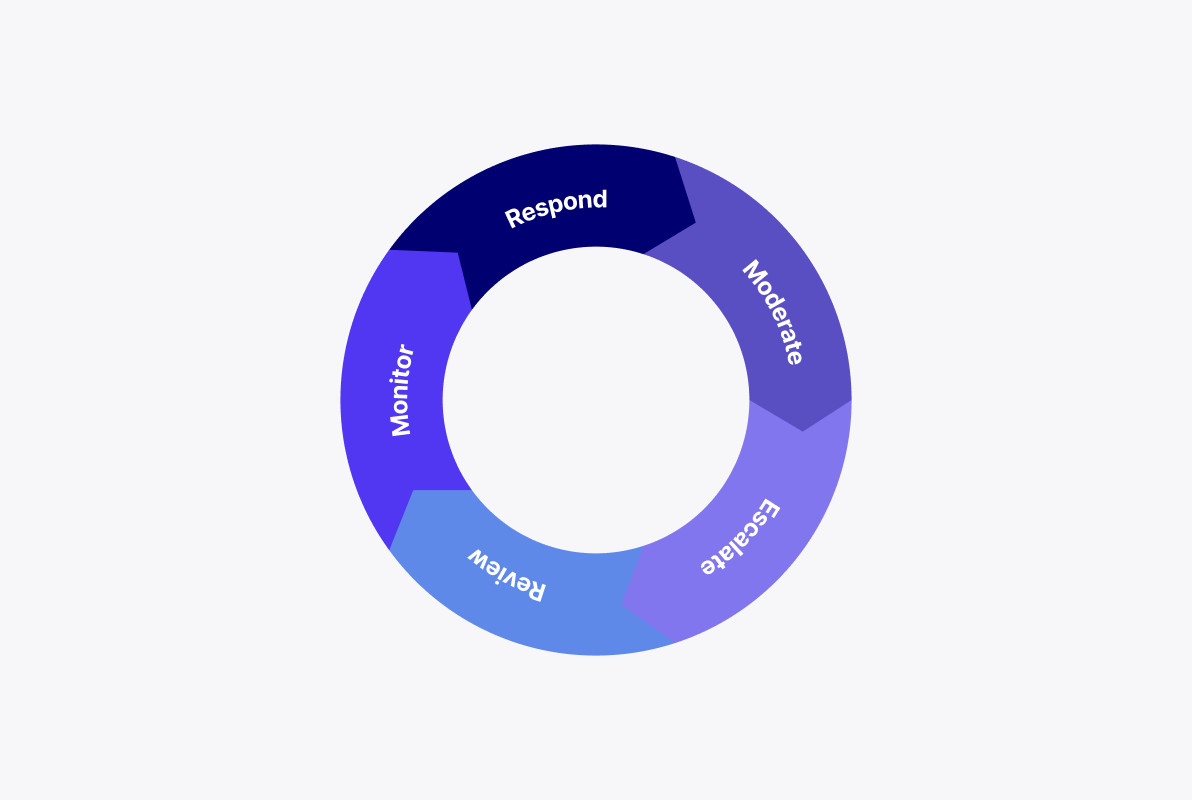
  • Moderation of groups, channels, and brand pages.
  • Escalation rules for complaints and sensitive topics.
  • Coordination with client teams on product, support, and PR issues.
Social Listening & Reputation Management

Social Listening & Reputation Management

We monitor brand mentions and respond based on real audience signals.
 

  • Tracking mentions across social platforms, blogs, and review sites.
  • Analysis of sentiment, key topics, and recurring issues.
  • Response scenarios for negative feedback and crisis situations.
  • Insights and recommendations for PR and product teams.
Analytics & Reporting

Analytics & Reporting

We provide structured reporting on social media performance.

  • Dashboards with reach, engagement, and community growth metrics.
  • Content performance analysis by format, topic, and platform.
  • Insights into audience behaviour and feedback.
  • Recommendations for content planning, posting cadence, and channel mix.
Influencer & Creator Marketing

Influencer & Creator Marketing

We plan and manage influencer collaborations tailored to Russian-speaking audiences and local platform dynamics.

  • Selection of creators based on audience fit, content style, and market relevance.
  • Campaign planning aligned with brand objectives and platform specifics.
  • Coordination of content briefs, publishing schedules, and approvals.
  • Management of creator communication and campaign execution.

Specific Challenges of Social Media Marketing in Russia

Social media marketing for Russian-speaking audiences has distinct characteristics that require a careful and adaptive approach. Local regulations, platform availability, and user behaviour all influence how SMM strategies are planned, executed, and managed across different channels.

Regulation and Platform Status

Some global platforms, including Instagram and Facebook, have a specific legal and operational status in Russia and are often accessed via VPN. Their advertising rules and risks differ from local platforms. We help brands assess these conditions, select an appropriate platform mix, and align activity with current regulatory and compliance requirements.

Platforms and Audience

Russian-speaking audiences split their attention across local social networks, messaging apps, and selected global platforms. Each channel has its own demographic, regional, and interest profile. We build an SMM mix across VK, Telegram, Instagram, Odnoklassniki, Facebook, and Discord based on brand objectives, audience reach, and communication priorities.

Measurement and Data

Language, tone of voice, and expectations around feedback differ within the Russian-speaking segment. User responses can be direct or emotional, and sensitive topics often require careful moderation. Our team adapts content to the local context and manages daily interactions to ensure the brand position remains clear, consistent, and appropriate.

Content and Moderation

Tracking and analytics tools do not always work uniformly across platforms, and available data can vary in depth and reliability. We combine native platform analytics, website data, and marketplace metrics to provide a practical view of how SMM contributes to awareness, traffic, and lead generation.

Key Social Platforms for SMM in Russia

Do You Have Questions About Social Media Marketing in Russia and CIS?

Get SMM Help

The Latest Insights on Emerging Trends and Innovations

Russian Digital Market Overview

Russian Digital Market Overview

The Current Ecosystem of the Russian Digital Market, including statistics, popular marketing tools, and media channels

Russian-speaking Influencer Marketing Overview

Russian-speaking Influencer Marketing Overview

Further insights and trends in the Influencer Industry within Russia & the CIS

We Work Closely with Brands and Companies While Also Collaborating with Advertising and Media Agencies

We Serve as a Regional Partner in Areas Where Russian is One of the Primary Languages

Eastern Europe

Russia
Belarus
Moldova

Caucasus Region

Armenia
Georgia
Azerbaijan

Central Asia

Kazakhstan
Turkmenistan
Uzbekistan
Kyrgyzstan
Tajikistan
Mongolia

Other Similar Services by RMAA

FAQ: Social Media Marketing in Russia and CIS

The social media audience in Russia is about 106 million users (73.5% of the population). On average, one person uses 5 platforms per month.

Daily internet usage in Russia is 8 hours and 38 minutes, of which 4 hours and 7 minutes are spent on mobile devices. A significant portion of this time is spent on social media and entertainment.

The main goals are: searching for information (80.4%), keeping up with news (66.1%), staying in touch with friends and family (65.6%), watching videos/movies (64%), and listening to music (52.5%).

Smartphones — 94.3%, laptops/PCs — 69.8%, Smart TVs — 38.7%. Mobile traffic continues to grow.

More than 75% of the population lives in cities, 42% are aged 25–54. The average age is 39.2 years. The social media audience: 45.3% male, 54.8% female.

Users actively use VPNs to access blocked platforms (Instagram, Facebook, X). At the same time, local services (VK, Telegram, Dzen) have gained popularity.

It is a unique network of technology companies, government platforms, and services that have developed independently of the global market. Key players: VK, Yandex, Sber, Ozon, Wildberries.

Programmatic advertising accounts for 83.2% of total digital advertising spending in Russia, reflecting the growth of automation and targeted solutions.

Telegram and WhatsApp are the leaders, but Telegram is actively developing as a platform for content and advertising. VK also launched a new messenger, MAX, in 2025.

Since September 1, 2022, all internet advertising in Russia must be labeled. It is controlled by Roskomnadzor, data is submitted through the Advertising Data Operator (ADO) to the Unified Registry of Internet Advertising (URIA). The label must include the word "Advertising," information about the advertiser, and a unique identifier (ERID).

All advertising addressed to an indefinite circle of people: targeted, contextual, display, native, bloggers' posts, stories, banners, advertising in Telegram, etc.

Prohibited: targeted posts, stories, reels mentioning a brand, integrations with bloggers, native reviews, calls to action ("buy," "click"), links to payment.

Publishing expert content (guides, interviews), company information, reviews (without emotional calls to action), posts about internal work, and answering questions in comments are allowed.

Starting April 1, 2025, a mandatory 3% fee on income from internet advertising placement is introduced. Everyone who earns from advertising must pay: companies, bloggers, self-employed individuals, etc.

These systems are automatically integrated with the ADO via API and generate tokens. For advertising with bloggers or in Telegram, you need to contact an external ADO.

The CIS audience is younger and more mobile-oriented, less covered by local ecosystems (Yandex, VK). Western platforms (Instagram, Facebook) are active.

Instagram and Facebook remain leaders, but the use of Telegram and YouTube is growing. In Kazakhstan, local services like Kolesa.kz are also popular.

Yes, but their effectiveness is lower than in Russia. Google Ads and targeting via Meta (Instagram, Facebook) are more commonly used in advertising.

In Kazakhstan and Belarus — Russian. In Uzbekistan and Kyrgyzstan — a mix of Russian and the national language. It is important to adapt creatives.

Currently, there is no mandatory labeling, but some countries (e.g., Kazakhstan) are discussing the introduction of similar regulations.

International payment systems (Visa/Mastercard) are available, but local solutions (e.g., Kaspi.kz in Kazakhstan) are popular. Bloggers face difficulties withdrawing funds.

Politics, interethnic relations, and religion. Neutral and apolitical content is recommended.

It is more decentralized, with many micro- and nano-influencers. Budgets are lower than in Russia. Barter collaborations are popular.

Google Analytics, Meta Business Suite, local counters (e.g., Mail.ru Analytics). Yandex.Metrica is less relevant.

No, but some countries (Uzbekistan, Turkmenistan) may have temporary access restrictions.

Consider cultural peculiarities, avoid "Russian centrism," use local examples and currencies (tenge, som).

Wildberries and Ozon are actively expanding in Kazakhstan and Belarus. AliExpress and local platforms (e.g., KazanExpress in Kazakhstan) are also popular.

VK (VKontakte) — 93 million MAU (Monthly Active Users), 64 minutes per user daily. It is the main platform for communication, video, and commerce.

Instagram is officially blocked, but 70% of the audience accesses it via VPN. Direct advertising is prohibited from 01.09.2025, but you can run expert blogs.

Telegram is a messenger, media platform, and advertising network. You can run ads via Telegram Ads, place ads in channels through exchanges, and use Yandex.Direct for Telegram.

Dzen is a blog platform from VK with a recommendation feed. Suitable for native content, articles, and videos. Advertising is available through VK Ads.

TikTok is available in limited mode: you cannot publish new content or watch foreign videos. Users use VPNs. Alternatives: VK Clips, Yappy, Rutube Shorts.

It is an analog of TikTok/Reels within VK. Short vertical videos, memes, challenges. Available through the VK app and the separate VK Clips app.

YouTube remains the leader in views, but since August 2024, loading speed on PCs and Smart TVs has decreased. It is recommended to optimize content for mobile and use Rutube as an alternative.

A single account for VK, Odnoklassniki, Dzen, and partner sites. Formats: video, banners, carousels, promotion of posts and clips. It offers smart targeting and automation.

A new messenger launched in 2025. Positioned as a Russian analog of WeChat. Includes chats, payments, government services, and identity verification.

Audience — users aged 35–54. Advertising is available through VK Ads. Suitable for mass-market goods, financial services, and nostalgic content.

Yes, but the audience is small (8.1% of the population). Suitable for niche projects (DIY, design, weddings).

Twitch, Discord, VK Play. Discord is blocked but accessible via VPN.

Yandex.Metrica and Google Analytics, but from 01.07.2025, using GA requires data localization and user consent.

Platforms like Calltouch, CoMagic, Roistat that track the entire customer journey—from click to purchase. They integrate call tracking, CRM, and web analytics.

Through cross-channel analytics, linking advertising costs (VK Ads, Yandex.Direct) with conversions (sales, leads) in the CRM.

These are tools for assessing the impact of display advertising on website traffic (Visit Lift) and on search queries (Search Lift).

Yandex.Audiences, Weborama, Segmento (MTS Ads), Soloway. They provide data for targeting and audience analysis.

Using specialized services: AdRiver, Admon.ai, Adserving, myTracker, as well as built-in Brand Safety systems in DSPs.

Calltouch, CoMagic, Callibri, Calltracking. They pinpoint the source of a call down to a specific keyword and integrate with CRM.

Through built-in channel statistics and third-party services (Telegram Analytics, TGStat). It is important to track reach, engagement, and transitions.

Automated reports that help analyze campaign effectiveness, conversions, CPA, ROI. In 2025, Report Master appeared in Yandex.Direct.

Through geotargeting, promo codes, call tracking, and integration with sales accounting systems (1C, CRM).

CTR, CPC, CPA, ROI, reach, engagement rate (ER), conversions, cost per lead, LTV (lifetime value).

Use Russian hosting, conclude contracts with local ADOs, update privacy policies, and configure cookie banners with consent.