How Programmatic Advertising Works in Russia
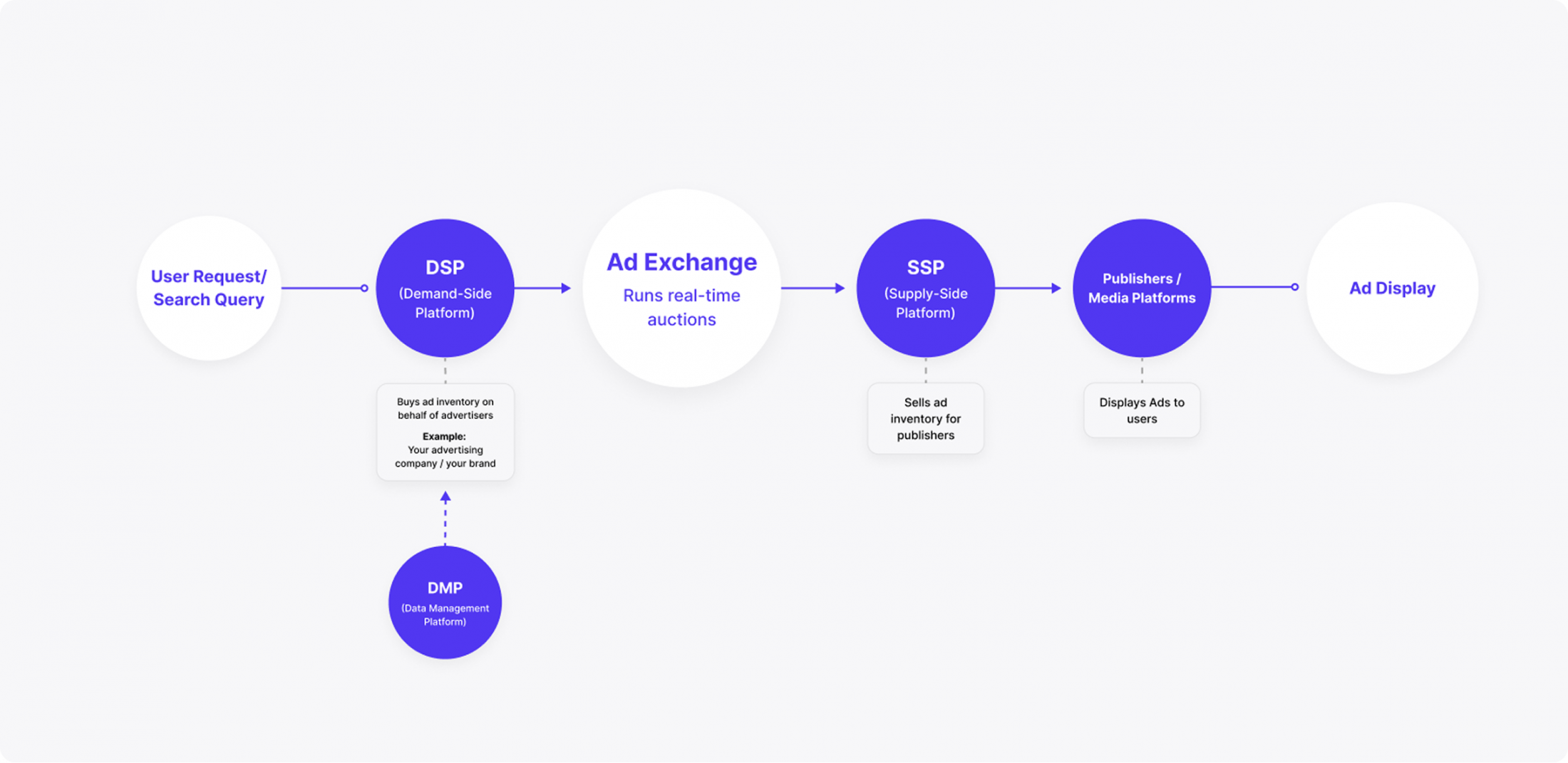
Programmatic advertising is useful when standard digital platforms are not enough for the campaign goal. In Russia, brands usually use programmatic ads for two main reasons: to scale media buying beyond core platforms or to reach a more specific audience with additional data signals, local inventory, and verification tools.

When Standard Digital Platforms Are Already Optimized
Programmatic advertising becomes relevant when a brand has already tested and optimized Yandex, VK, Telegram, or other core digital platforms, but still needs more reach. At this stage, programmatic ads help expand the campaign through additional websites, apps, video inventory, CTV, DOOH, mobile placements, and local programmatic platforms.


When the Brand Needs a Highly Specific Audience
Programmatic advertising is useful when a brand needs to reach an audience that cannot be described only by age, gender, city, or broad interests. In Russia, programmatic campaigns can use purchase behavior, retail categories, fiscal data, telecom data, location signals, website behavior, CRM audiences, or look-alike segments.
Programmatic Ad Formats
Display Banners for Reach and Traffic Campaigns
Display banners are a common programmatic ad format in Russia. They help brands reach audiences across websites, mobile pages, apps, publisher networks, and available display inventory.
Online Video for Programmatic Campaigns in Russia
Online video uses video creative in programmatic campaigns across websites, apps, video platforms, and digital video inventory. It is useful when a brand needs visual storytelling, product explanation, or stronger message recall.
Mobile In-App Ads for Mobile-First Audiences
Mobile in-app ads help brands reach users inside mobile applications. This format is relevant for mobile-first campaigns, app-related products, gaming, e-commerce, and location-based communication in Russia.
CTV and Smart TV Advertising for High-Impact Video Reach
CTV and Smart TV advertising delivers video ads in connected television environments. In Russia, this format can help brands combine large-screen visibility with digital media planning.
Digital Audio for Screen-Free Audience Reach
Digital audio advertising helps brands reach users while they listen to music, podcasts, online radio, or other audio content. It can add frequency when screen-based formats are not enough.
Native Ads for Contextual and Consideration Campaigns
Native ads fit naturally into the content environment of a website, app, or publisher platform. They are useful for softer communication, contextual relevance, traffic generation, and product education.
Rich Media for Interactive Brand Engagement
Rich media formats add interactivity, animation, expanded creative space, or gamified mechanics to programmatic campaigns. They help brands create more engaging experiences than standard static banners.
Best For
- Broad reach and ongoing visibility
- Website traffic
- Retargeting campaigns
- Product reminders
- Tactical offers and promotions
Typical Placements
- Websites and mobile web pages
- Publisher networks
- Mobile apps
- Static and animated banners
- Responsive and standard IAB display formats
Why It Works
- Easy to scale across digital inventory
- Flexible for different campaign stages
- Supports awareness and retargeting
- Can use audience data and frequency control
- Provides measurable campaign reporting
Best For
- Brand awareness
- Product launches
- Storytelling
- Audience education
- Product demonstrations and consideration campaigns
Typical Placements
- In-stream video
- Out-stream video
- In-feed video
- Mobile and vertical video
- Short-form video and selected CTV inventory
Why It Works
- Combines motion, sound, and visual messaging
- Reaches users in video environments
- Delivers more context than static ads
- Can be planned with audience targeting
- Supports measurable delivery and reporting
Best For
- Mobile reach
- App installs
- Gaming campaigns
- E-commerce promotion
- Local offers and location-based targeting
Typical Placements
- In-app banners
- Interstitial ads
- Rewarded video
- Native in-app units
- Playable and full-screen mobile formats
Why It Works
- Reaches users in focused mobile environments
- Supports interactive and full-screen formats
- Can use mobile behavior and location signals
- Works with app category targeting
- Supports awareness and performance goals
Best For
- Brand awareness
- Product launches
- Premium positioning
- Video storytelling
- Household-level communication and TV-like impact
Typical Placements
- Connected TV applications
- Smart TV environments
- Streaming video services
- Available CTV inventory
- Large-screen video placements
Why It Works
- Creates a high-impact viewing experience
- Reaches users in high-attention environments
- Combines TV-like visibility with digital planning
- Supports audience segmentation
- Allows frequency control and campaign measurement
Best For
- Brand awareness
- Regional campaigns
- Frequency building
- Audio branding
- Seasonal promotions and daily routine-based reach
Typical Placements
- Streaming audio services
- Online radio
- Podcast environments
- Music platforms
- Mobile audio apps and companion banners
Why It Works
- Reaches users when visual formats are not active
- Fits commuting, work, study, and daily routines
- Strengthens multimedia campaign frequency
- Complements video, display, and mobile ads
- Supports memorable audio branding
Best For
- Content promotion
- Product education
- Lead nurturing
- Traffic generation
- Consideration and trust-building campaigns
Typical Placements
- Recommended articles
- In-feed placements
- Content widgets
- Sponsored cards
- Promoted content on publisher platforms
Why It Works
- Feels less intrusive than standard display formats
- Matches the surrounding content environment
- Attracts users open to reading or comparing
- Supports editorial-style communication
- Helps explain complex products or services
Best For
- Brand engagement
- Product demonstrations
- Interactive storytelling
- Gamified campaigns
- Product exploration and high-impact launches
Typical Placements
- Expandable banners
- Interactive banners
- Swipeable units
- Playable ads
- Gamified banners and rewarded video
Why It Works
- Encourages users to interact with the ad
- Increases engagement time
- Helps improve brand recall
- Communicates product features clearly
- Creates a stronger experience than static formats
Need Help Choosing The Right Programmatic Setup in Russia?
Send RequestProgrammatic Ads vs Standard Digital Advertising Platforms in Russia
Standard digital platforms are usually the first layer of online advertising in Russia, including Yandex Direct, VK Ads, Telegram Ads, and other platform-based tools. Programmatic advertising adds a more flexible media buying layer, helping brands use audience data, additional inventory, cross-platform placements, and independent verification for more controlled campaign delivery.
Builds a campaign across data sources, DSPs, publishers, apps, video inventory, CTV, DOOH, and other available placements.
Uses audience data, purchase signals, location, behavior, contextual data, first-party data, and custom segments.
Suitable for complex media plans, niche audiences, cross-platform reach, and custom data-driven strategies.
Display, video, CTV, audio, native, DOOH, in-app
Can include third-party verification, viewability checks, anti-fraud tools, brand safety control, and transparent reporting.
Best for scaling beyond core platforms, reaching specific audiences, and building broader programmatic media campaigns in Russia.
Works mainly inside one ecosystem, such as Yandex Direct, VK Ads, or Telegram Ads.
Uses targeting options available inside the platform interface, usually based on platform data and advertiser settings.
Easier to launch and manage, but less flexible for advanced audience planning or external data use.
Mostly display and video on one platform
Usually relies on the platform’s own reporting and internal campaign measurement tools.
Best for core digital campaigns, basic performance activity, retargeting, and ongoing promotion inside major platforms.
Audience Targeting Opportunities with Programmatic Ads
Category Buyers
High-Intent Audiences
Geo-Based Audiences
Look-Alike Audiences
Lifestyle Segments
Retargeting Audiences
Our Work

Jazeera Airlines: Targeting Key Audiences via Programmatic Ads in the CIS
We Work Closely with Brands and Companies While Also Collaborating with Advertising and Media Agencies










Free Whitepapers on Programmatic & Digital Media in Russia

Russian Digital Market Overview
The Current Ecosystem of the Russian Digital Market, including statistics, popular marketing tools, and media channels

How Does the Media-Buying Market in Russia Work?
Market report for global media buyers engaging with the Russian media landscape
Russian-Speaking Influencer Marketing Overview
Further insights and trends in the Influencer Industry within Russia & the CIS
Russian Digital Market Overview
The Current Ecosystem of the Russian Digital Market, including statistics, popular marketing tools, and media channels
How Does the Media-Buying Market in Russia Work?
Market report for global media buyers engaging with the Russian media landscape
Russian-Speaking Influencer Marketing Overview
Further insights and trends in the Influencer Industry within Russia & the CIS
Frequently Asked Questions About Programmatic Advertising in Russia
* Meta is recognized as an extremist organization in the Russian Federation.
- Media inflation of 8–15% per year, driven by reduced inventory supply and growing demand.
- A shift toward closed ecosystems. Yandex, VK, and MTS are each building self-contained stacks.
- Mobile video and Smart TV/CTV growing roughly 20% year over year.
- Local AdTech vendors filling the gap left by Western platforms.
- Generative AI moving into creative production, predictive targeting, and bid optimization.
* Meta is recognized as an extremist organization in the Russian Federation.
- Wasted spend on fraudulent traffic when no verification is in place.
- Wrong conclusions due to broken attribution and missing end-to-end analytics.
- Overpaying for inventory because of poorly configured bid strategies.
- ERID labeling mistakes that lead to fines from Roskomnadzor.
| Component | Role |
|---|---|
| DSP (Demand-Side Platform) | The advertiser’s interface: campaigns, targeting, bids |
| DMP (Data Management Platform) | Stores and segments audience data |
| Ad Exchange | Hosts the real-time auction |
| SSP (Supply-Side Platform) | The publisher’s side: sells inventory |
| Verification tools | Weborama, AdRiver, and others check impression quality |
- Open RTB. Open auction, broad inventory, lower price, higher fraud risk.
- Private Marketplace (PMP). Invitation-only auction with selected premium publishers.
- Programmatic Direct. Guaranteed inventory at a fixed price and volume.
- Analytics layer. Yandex Metrica flags anomalies like 100% bounce rate and zero session time.
- DSP-level filters. Hybrid, MTS Ads, and others have built-in anti-fraud.
- Third-party verification. Weborama, AdRiver, myTracker run independent checks.
| Goal | Recommended formats |
|---|---|
| Mass awareness | Online video (in-stream, pre-roll), CTV/Smart TV, display |
| Storytelling, education | Online video (mid-roll), native ads |
| Frequency, reminder | Digital audio, display, out-stream video |
| Mobile audiences and apps | Mobile in-app, rewarded video, vertical video |
| Premium positioning | CTV/Smart TV, online cinemas (in-stream) |
| Retargeting | Display banners, out-stream video, native |
- Mobile device coordinates, accurate to a city district.
- Anonymized telecom data from MTS, Beeline, and MegaFon.
- Wi-Fi and GPS signals from mobile apps.
- IP addresses, the broadest and least precise option, but useful as a fallback.
- First-party data: your own CRM, site, app, and pixels.
- Telecom data: MTS, Beeline, all anonymized, covering geo, demographics, interests.
- Retail data: partnerships with Ozon, Wildberries, and similar.
- Fiscal data: receipt aggregators.
- Behavioral and contextual data from Yandex and VK.
- Data brokers: Weborama, Segmento, Soloway.