Switching from Broad Awareness to Sales: An Ascensia Contour Media Campaign in Russia
Switch active buyers away from competing glucose meters and build recognition among newly diagnosed patients by targeting confirmed category purchasers instead of buying broad demographic reach.
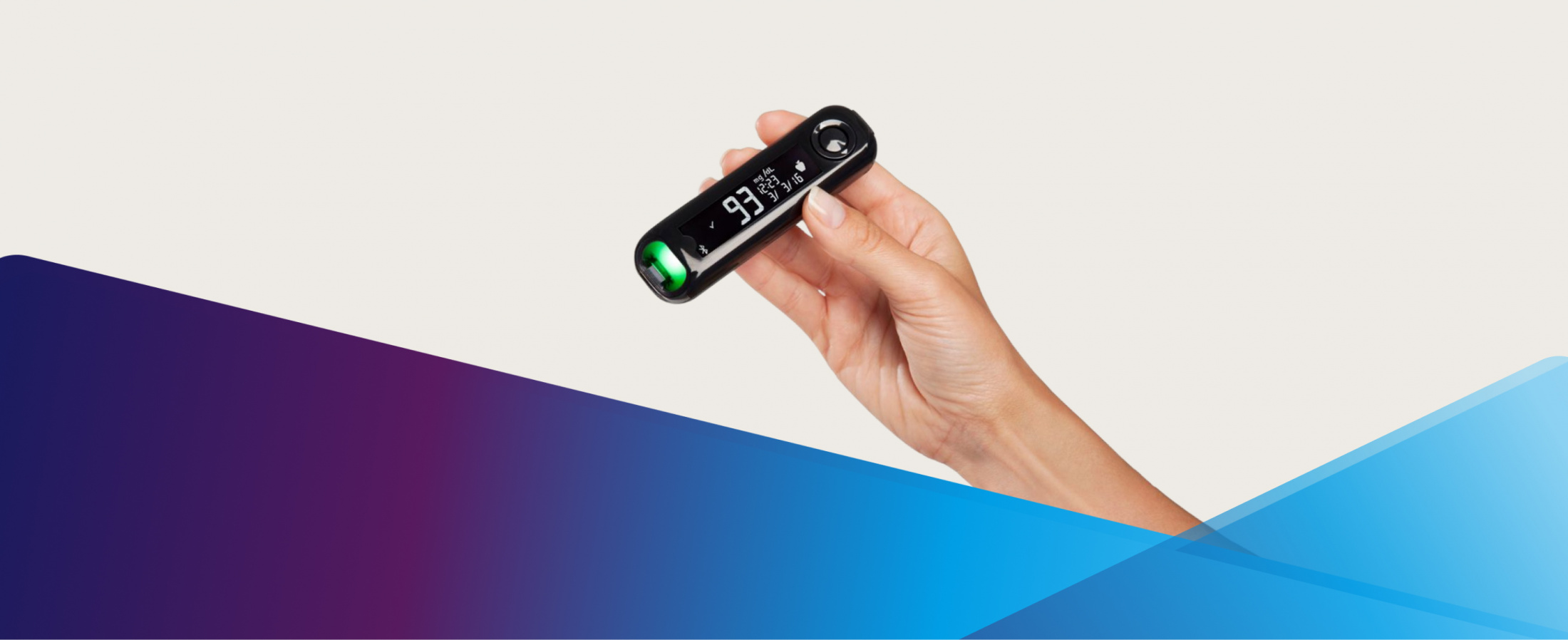
285M+ impressions independently audited
38.9% growth in awareness according to a brand lift study
Background
Ascensia Diabetes Care is the producer of blood glucose monitoring systems under the Contour brand. These devices can send readings through a companion app into EMIAS, the medical information system behind Moscow public healthcare, and as of 2021, no other device in Russia could do that. Even so, when this project began, the brand ranked fourth in Russia behind Accu-Chek, OneTouch, and the domestic Satellite range.
Selling such devices in Russia means dealing with strict medical advertising rules and high market competition. Another obstacle is loyalty, because a patient who has relied on the same meter for years has little reason to risk a different one. Contour had answered that difficulty by buying broad visibility, which kept the name in circulation without showing who it reached. The timing favored something sharper, because demand had been climbing since 2020 while the two largest competitors stayed quiet on television.
Ascensia held a competitive pitch to select an agency, and RMAA Agency won it by defending a media strategy that replaced broad reach with purchase evidence. The campaign that followed ran for two years across seasonal flights. Alongside it, we rebuilt the brand's owned assets so that new demand had somewhere to land, and that parallel track appears in a separate case study.
Goal
Test strips generate roughly 44 percent of revenue in this market against less than 6 percent for meters. A meter therefore exists to create a strip customer, and winning one buys years of repeat purchases.
Finding someone worth switching was the harder part. A diagnosis says little about who is close to buying, so we set diabetes type aside and built the plan around observed purchases.
We agreed on a set of objectives at the start of the engagement, and each one pointed to a concrete tool in the plan that followed.
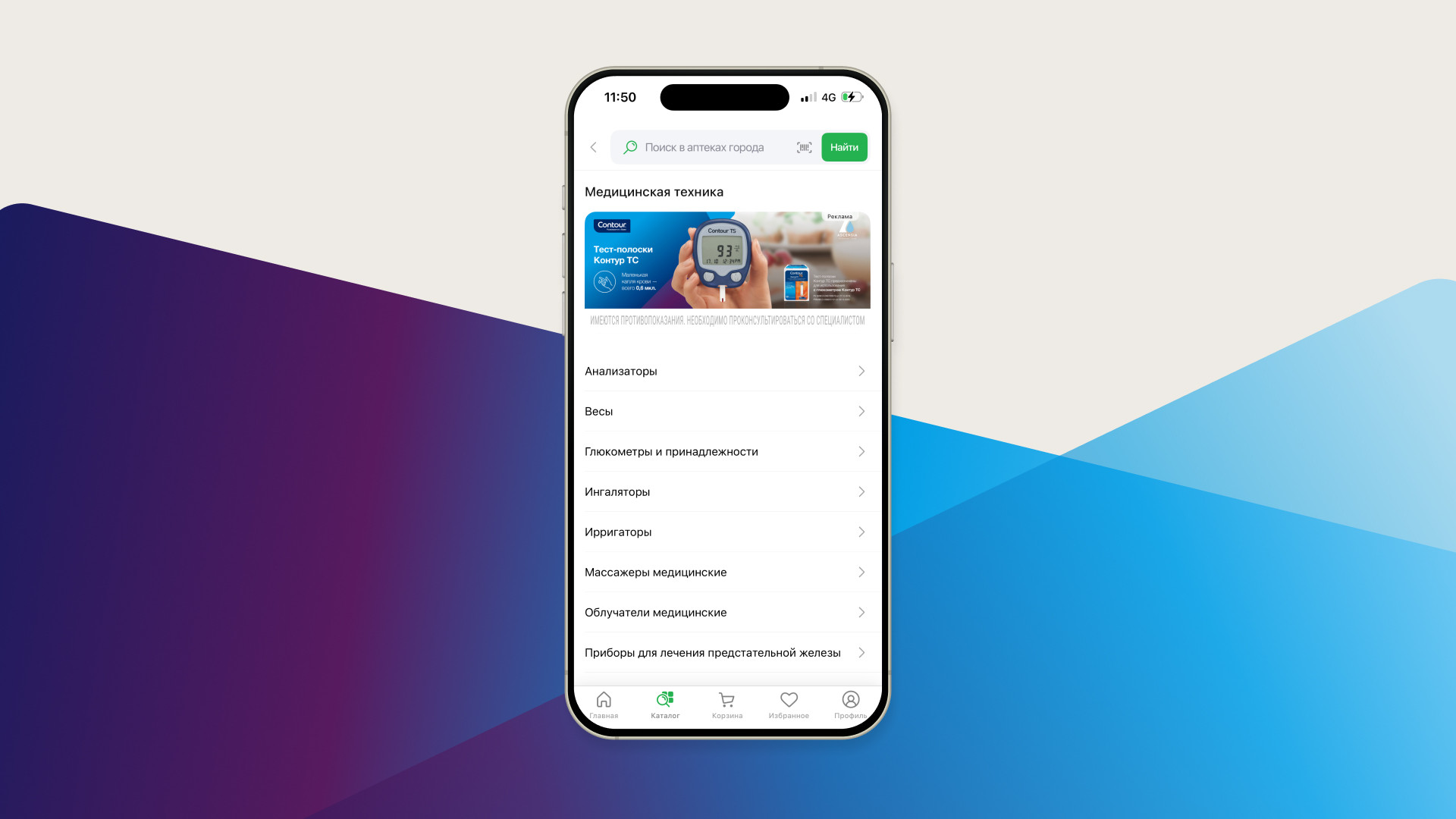
- Reach confirmed category buyers through programmatic video and display advertising built on pharmacy receipt, mobile carrier, and marketplace data, so impressions went to people who had already bought a competing device.
- Catch active demand on Yandex Direct, including queries for competitor brands, so the plan met shoppers at the moment they compared options.
- Reach readers inside relevant content through contextual placement in medical and health publications, where a message about a glucose meter belongs.
- Build a durable audience through paid social on VKontakte, Odnoklassniki, and Telegram, and through influencer partnerships with creators connected to diabetes.
- Drive installs of the Contour Diabetes app with targeted mobile media, so the brand kept a direct line to its users.
- Verify the outcome with independent ad tracking and a brand lift study rather than platform reporting.
Solution
Programmatic Advertising
Reaching diabetes patients without paying for broad, wasted reach required targeting data from outside the standard ad-platform inventories. By layering pharmacy receipt data through OFD (operators of fiscal data) with Ozon marketplace shopping histories, we built segments of users who actually buy blood-sugar test strips or competitor devices, then served the work only to those segments through major Russian programmatic networks. The plan ran on two parallel tracks, one for online video and one for display, so that each network could reach the user at a different stage of intent.
Track 1: Online Video (OLV)
The video layer ran short segments to build top-of-funnel brand lift and keep Contour visible across the long consideration cycles typical for medical devices. Working from the same retail and carrier data, and extending into a major Russian online-cinema (CTV) environment, online video delivered more than 18.5 million impressions and over 283,000 clicks, which sent an early wave of qualified traffic to the landing pages and supplied the exposed audience for the brand-lift study that followed.
Track 2: Multi-Channel Display Strategy (Banners)
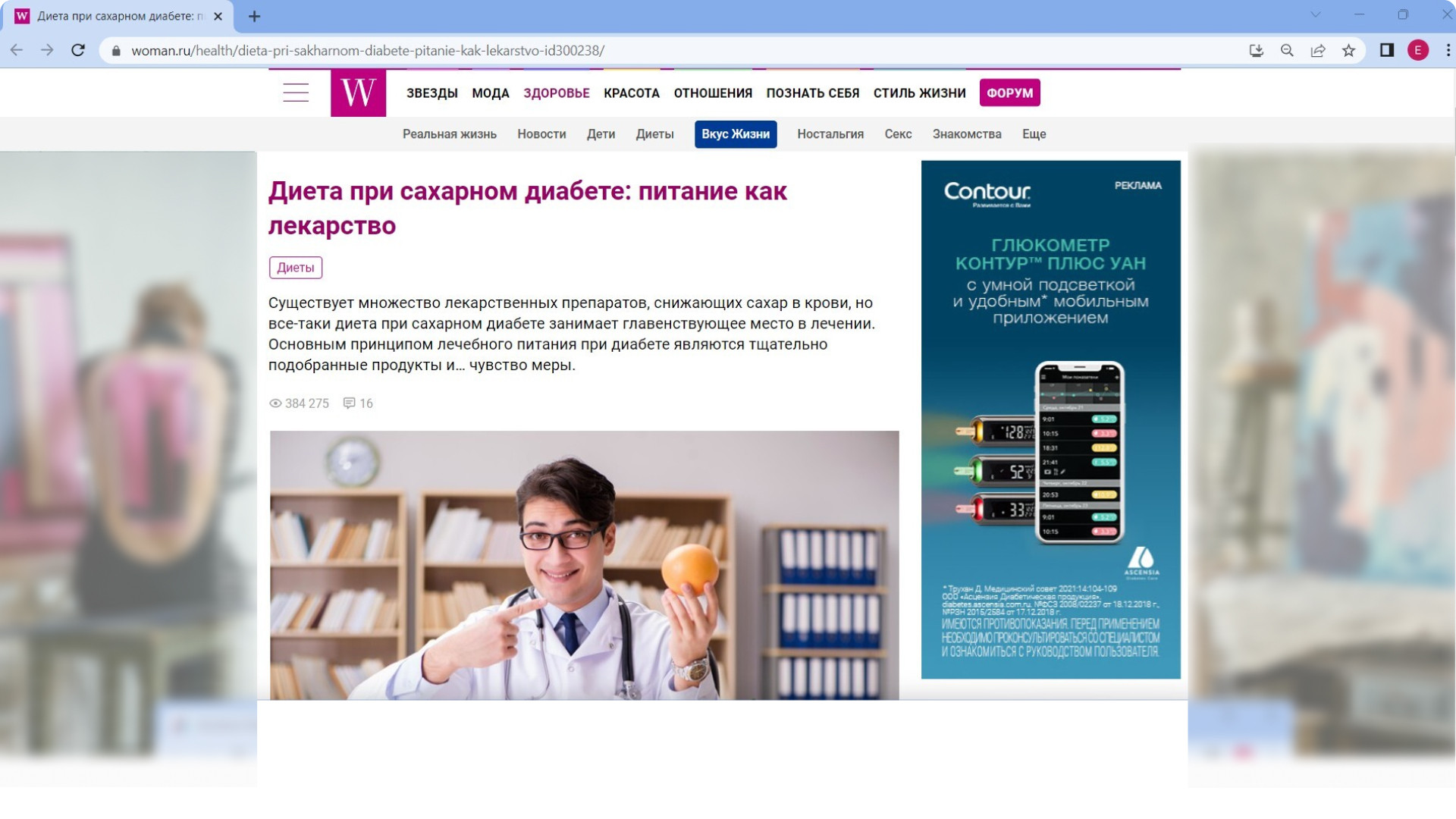
To stay on the consumer's radar right when they were making a buying decision, we launched a massive display campaign. Each programmatic partner used unique data layers to eliminate ad waste. Running continuously across multiple seasonal flights from September 2022 to July 2024, they brought the following results:
- Display ran in parallel across several major Russian programmatic networks, each drawing on a different data set so the same household could be met at a different stage of intent. One stream read marketplace purchase history and pharmacy-receipt records to find buyers of competing test strips, another crossed mobile-carrier analytics with receipt data to profile people who visit physical pharmacies, and a third retargeted past site visitors and users typing medical queries into search. Taken together, they delivered more than 100 million impressions and over 370,000 clicks to the site, all kept off broad inventory.
- Two placements worked differently enough to report on their own. A medical paid advertising tool served native banners inside premium health articles for 34,480,973 impressions, while its interactive units drew readers into the content and held the highest CTR, adding another 6,963,274 impressions. The Uteka pharmacy aggregation app then placed banners inside its own e-commerce environment to catch high-intent shoppers near the bottom of the funnel, generating 13,550,150 in-app impressions and 170,675 direct pharmacy actions across the seasonal flights.
Contour Diabetes App
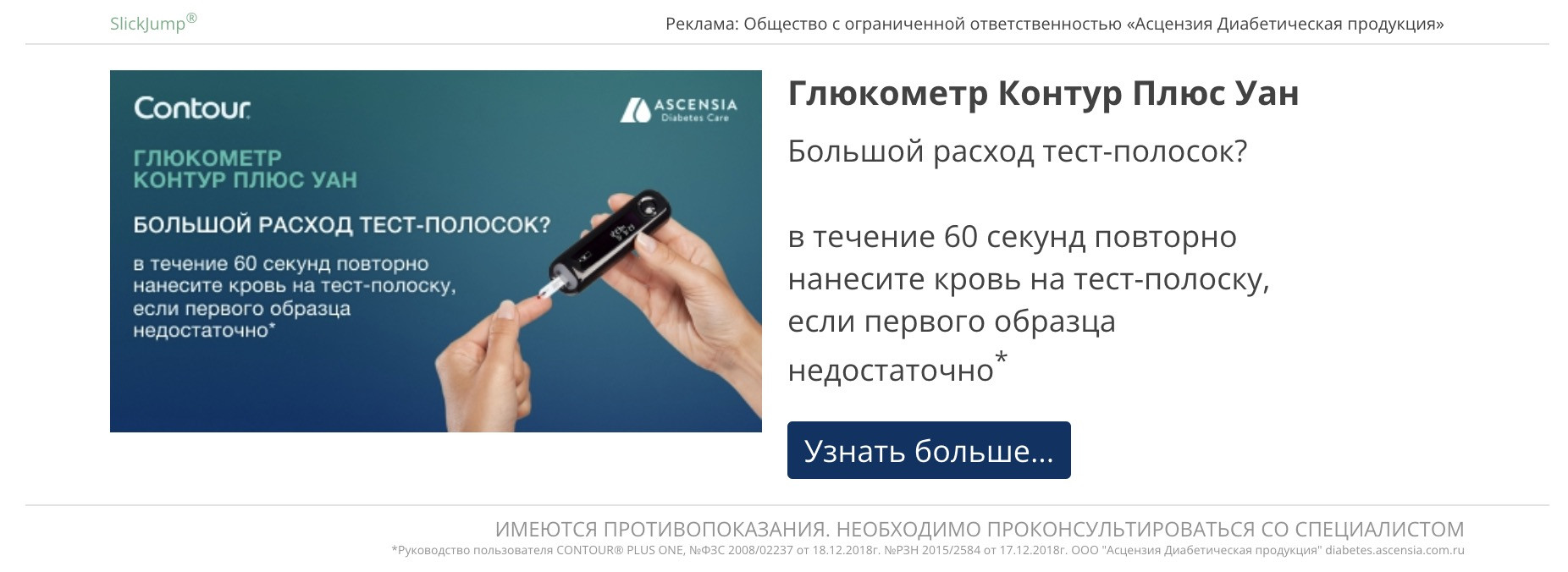
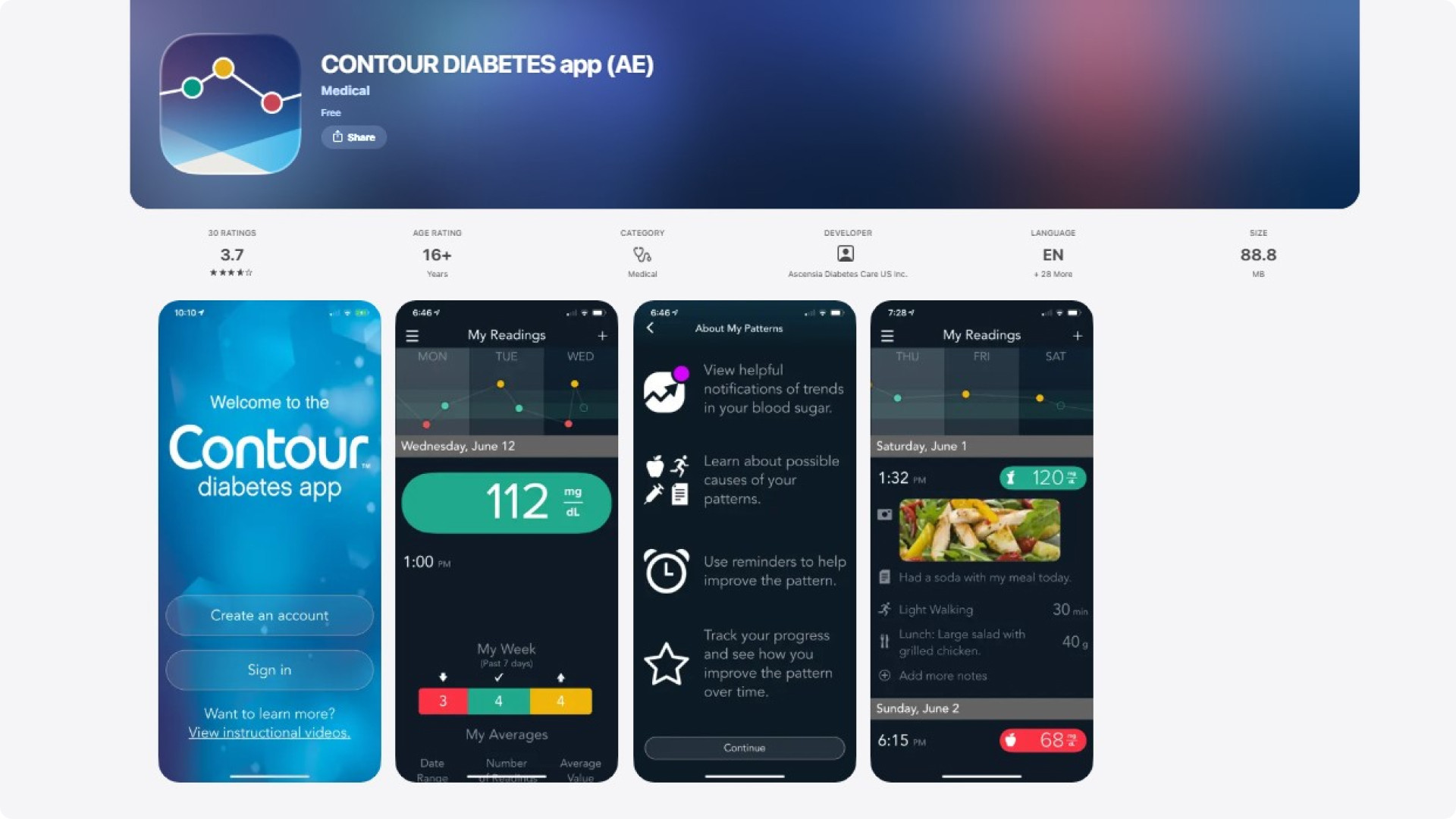
The Contour Diabetes app needed installs from people who would actually use it, so acquisition ran against the same purchase segments as everything else. One network matched retail receipt data to reach owners of a competing meter, while the other worked from search behavior around diabetes. Banners and video pack shots delivered 12,087,117 impressions and 58,546 clicks through to the App Store and Google Play, which pointed demand at the one asset that turns a single purchase into daily use.
Impression Audit
Every network reports on its own delivery, so we ran independent third-party verification across the campaign and tracked two control metrics beside each line.
The first was bot traffic, which ranged from 0.46 percent on paid search to 8.46 percent on one video provider, and that provider hit 31.9 percent in a single month with a weekly peak above 80 percent. The second was how many clicks became real site visits, where the best source delivered 73.5 percent while others managed only 41 to 50 percent, which means a click at the same price could be worth half as much. One platform compensated 474,852 impressions and 463 clicks against a shortfall in its delivery, and another left the plan altogether once its traffic proved to be inflated.
Paid Search
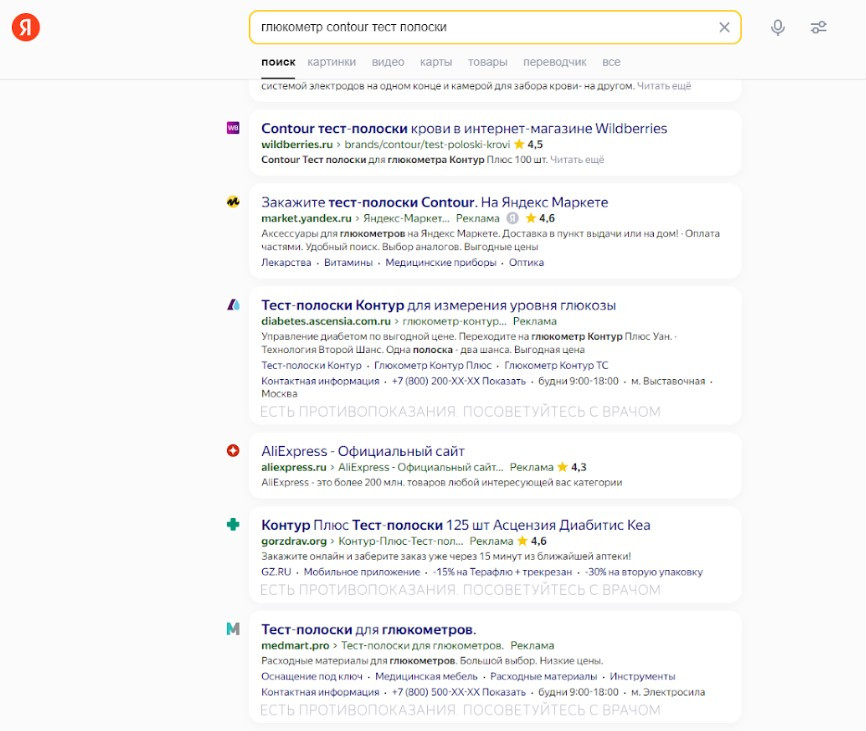
To capture users already looking to buy a device, we set up a clean paid search campaign in Yandex Direct. Instead of fighting only for expensive, broad terms, we used a smart mix of commercial keywords and competitor brand queries. The search marketing campaign across the entire 2022–2024 campaign generated 67,592,032 impressions and 590,309 direct clicks.
Paid Social and Telegram
Social platforms let us reach the category through communities rather than through banners. VKontakte carried the largest share of that investment with more than 36 million impressions and 87,297 clicks. Odnoklassniki drew 61,650 clicks from 3.3 million impressions, a click-through rate roughly eight times higher, because the platform reaches an older audience that matches this category closely. Earlier flights ran through myTarget before VK folded that system into a single advertising platform, and those added 415,464 impressions and 20,219 clicks.
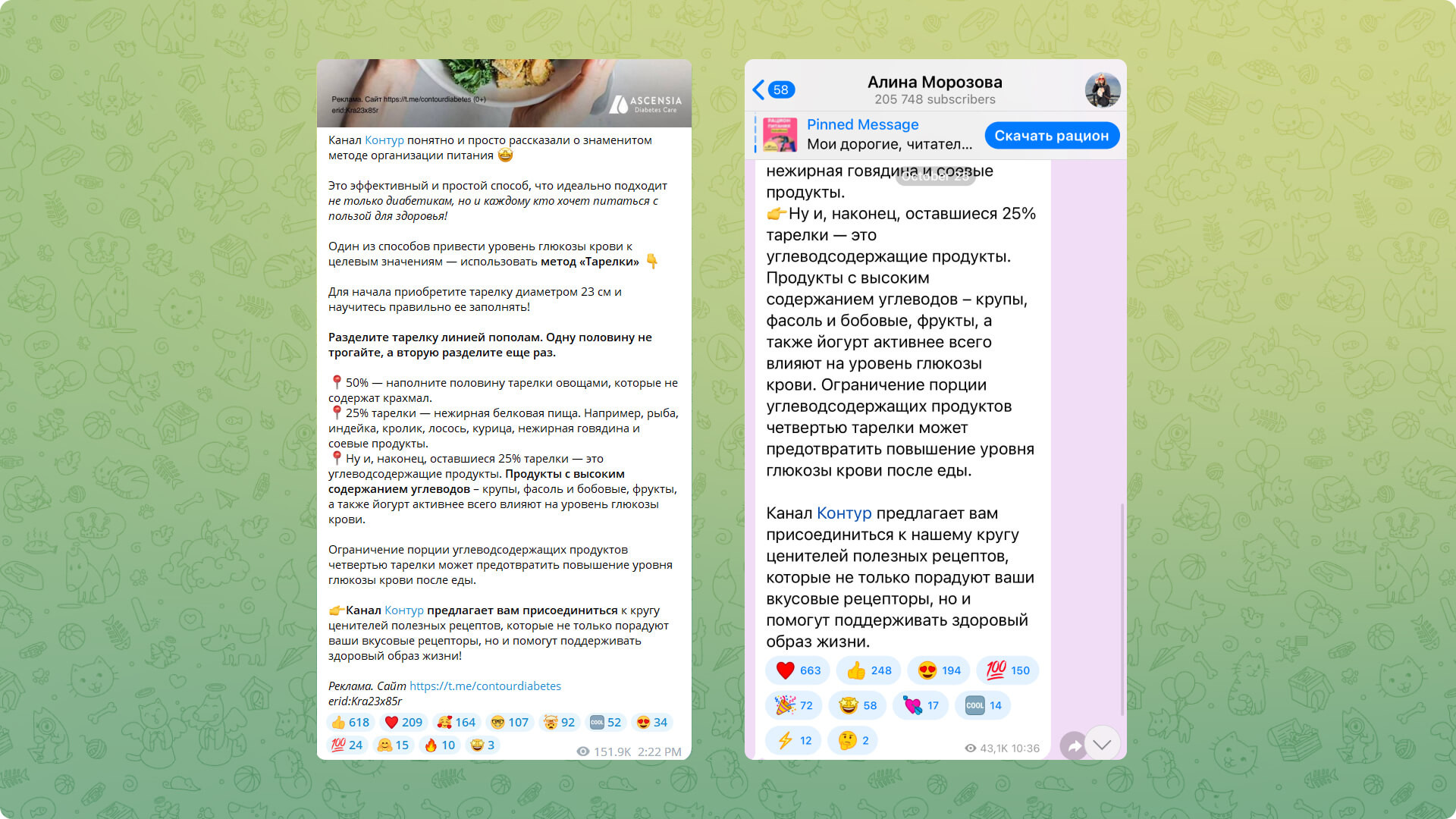
Telegram required different logic, since the platform rewards trusted editorial voices rather than conventional ad formats. We seeded content across specialist medical and health channels whose subscribers follow diabetes topics deliberately, which meant the message arrived inside a feed the reader had chosen. That track delivered 3,124,406 impressions and 24,729 clicks.
Influencer Marketing
Patients trust other patients far more than they trust a manufacturer, so we partnered only with creators connected to the condition. Three of them live with diabetes and speak about it openly, one runs a specialist retailer for diabetes supplies, and one works as a nutritionist, which covered credibility, purchase context, and clinical authority in a single flight.
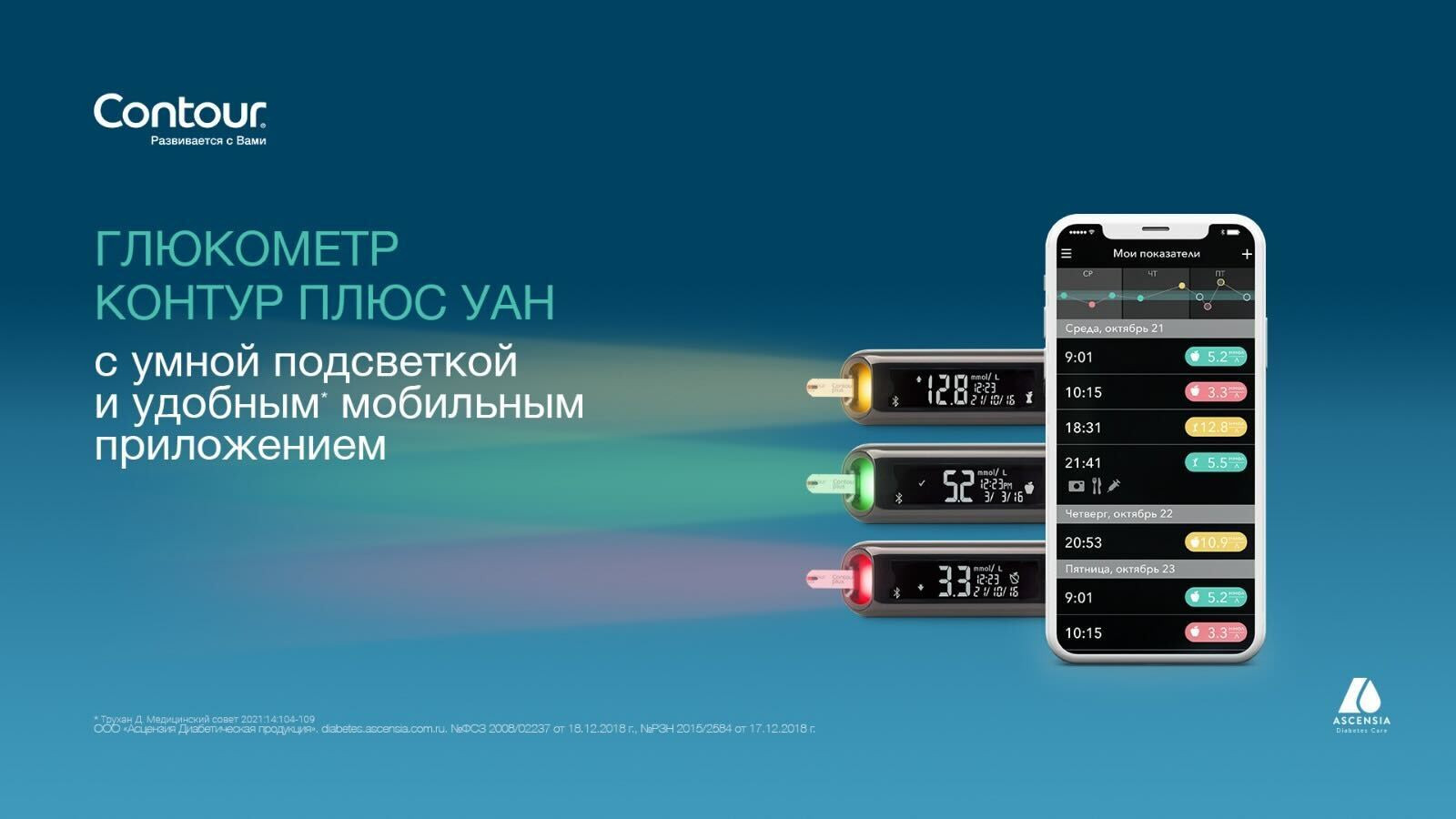
Nyura Sharikova (76K followers across YouTube, VK, Instagram, and Dzen) produced short vertical videos that explained how the glucometer syncs with a smartphone, and her clips collected 24,494 views.
Kristina Ibadullaeva (21,614 subscribers in total) focused on product aesthetics, showing how the smart light indicators on the device fit into daily routines and got 13,188 views.
Yana Surova (20,7K followers) then filmed longer lifestyle guides with practical tips for everyday blood testing.
Between them, they published 20 posts about the device and 15 about the companion app, and that material collected 61,544 views.
Brand Lift Survey
To check how the programmatic work actually moved perception of the Contour brand, RMAA Agency ran a Brand Lift Survey (BLS). The setup split a representative sample at random into two groups. The test group saw the Contour ads during the flight, while the control group did not. Once the flight ended, we polled both sides on the same brand metrics, so the difference between the answers showed the effect of the media on its own.
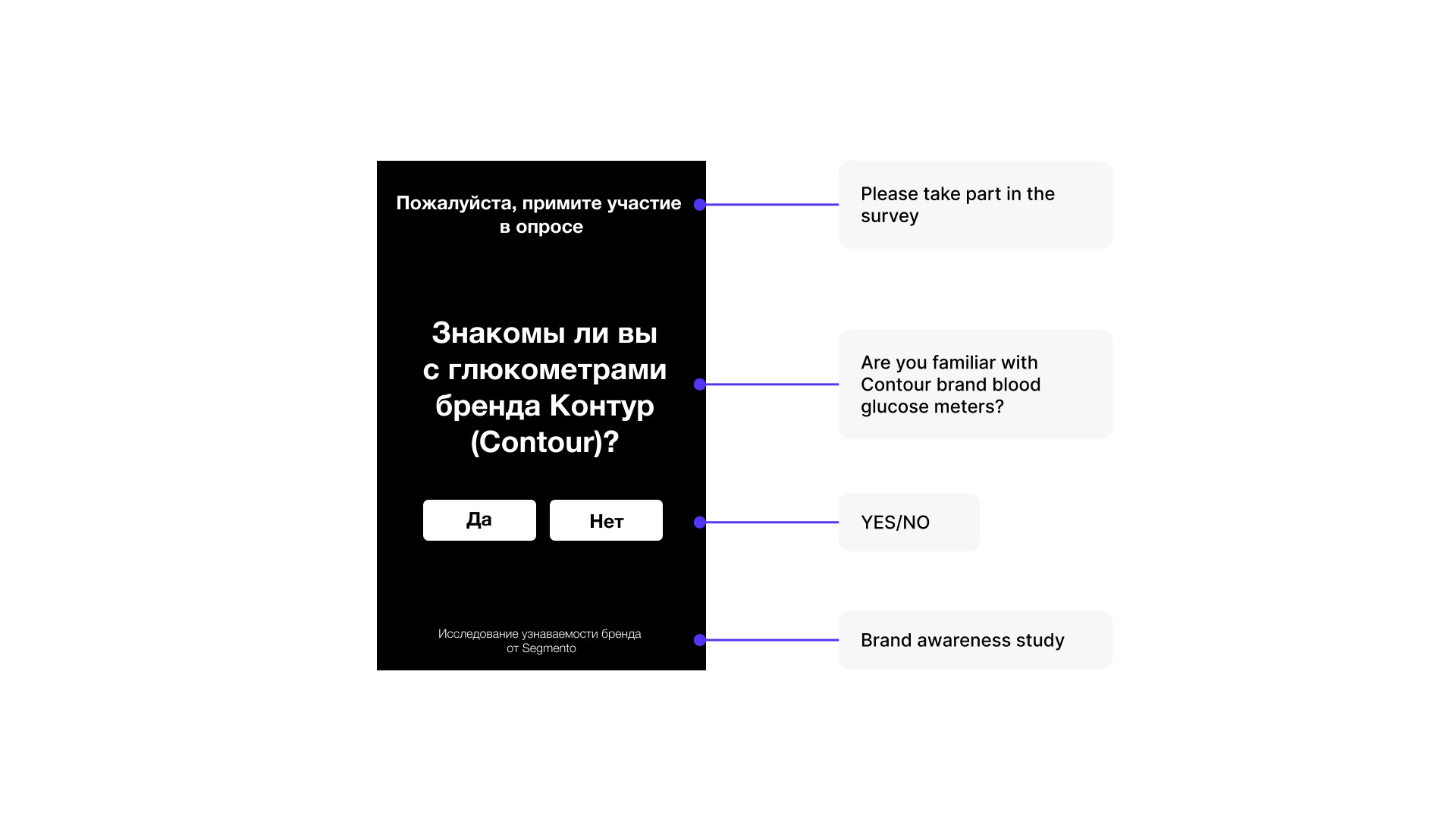
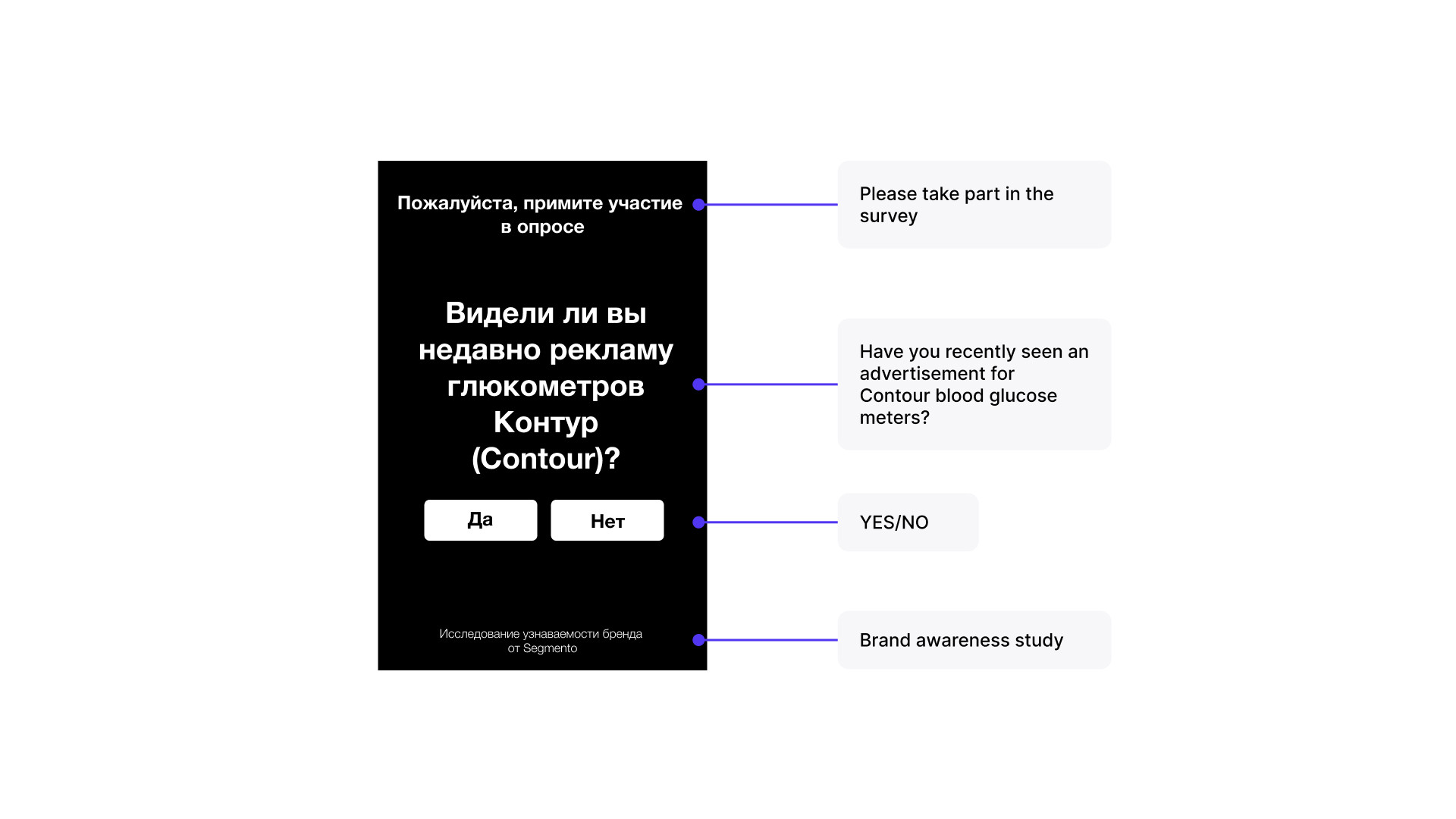
Both formats held at a 99% confidence level:
- Online video registered a 38.91% brand lift, with positive response at 47.63% in the exposed group against 34.29% in the control.
- Display banners registered a 32.57% brand lift, with positive brand recognition at 37.57% in the exposed group against 28.34% in the control.
Results
By the end of the campaign, the plan worked as one pipeline rather than a set of separate placements.
- Qualified traffic: 2.3M+ clicks, every one from a segment built on verified purchase data.
- Reach: 285M+ impressions across programmatic, search, and social, independently verified.
- Pharmacy app actions: 170,675 clicks inside the booking environment closest to a purchase.
- Brand lift: 38.91% awareness growth on online video and 32.57% on display banners, measured against a control group at 99% confidence.