YouTube, Twitch, and Yandex Ads for the Launch of RF Online Next in Russia
Build awareness and pre-registration demand for RF Online Next among Russian MMORPG players
347,501 clicks to the pre-registration page from Yandex ads
Background
RF Online Next is the global relaunch of RF Online, a science fiction MMORPG that first appeared in 2004 and gathered a large international player base. The new title was published by Netmarble, one of the largest game publishers in South Korea.
Russia was a natural market for the project because the earlier game had built a strong community there in the 2000s. Many Russian players remembered it personally, which created both an opportunity and a challenge. The brand name attracted attention on its own, but the returning audience also arrived with high expectations and a habit of comparing every new detail with the version they knew.
RMAA Agency was responsible for the Russian part of the global game promotion campaign and covered both the influencer program and the media buying. An earlier project for the same publisher had already established a working model that both teams could rely on from day one.
Goal
We had to build interest in a game that nobody could play yet, holding attention across the eight weeks of pre-registration and then concentrating it on the worldwide launch date. Videos released before June 17 could therefore use only official footage, while launch content needed real gameplay. Our job was to secure creators from a narrow circle of specialist MMORPG channels, deliver the first full casting and media proposal within five days of the brief, and run two parallel Yandex tracks through repeated budget and schedule changes.
Solution
Audience and market context
The campaign targeted Russian-speaking MMORPG players, who usually discover new titles through YouTube reviews, Twitch streams, and specialized gaming channels. For a returning brand like RF Online, this mattered even more, because trusted creators could introduce the sequel and answer the comparisons that longtime fans were bound to make. Yandex advertising added broad and measurable reach across its network, and VK Ads later extended coverage on Russia's largest social platform.
Strategy
RMAA Agency delivered the first full proposal within the five-day window set by the client, covering a longlist of Twitch streamers with notes on each channel's MMORPG background, a separate selection of YouTube creators, and a Yandex media mix for both phases. During pre-registration, the focus fell on long-form YouTube videos, since the client preferred uploaded content while full gameplay was still unavailable. These videos introduced the game and sent viewers to the pre-registration page and the official Discord through individual tracking links. Once the servers opened, the focus moved to live Twitch and YouTube streams, because real gameplay became the strongest proof of the product.
For the media part, we offered two possible Yandex strategies. The client chose to repeat the setup of the previous campaign for the same publisher, so they ran on the "Maximize impressions" option with an even split between media and performance placements. We also advised against a Yandex Search campaign at the start, since search demand for the title was still limited, and brought Search back as a scaling option once that demand had grown.
Throughout the project, we guided the client through the specifics of advertising in Russia, from mandatory age-rating labels to the registration of ad content in the national advertising registry, and localized all Russian ad texts with reverse translations into English for review.
Influencer program
RMAA Agency compiled and continuously expanded casting lists of Russian creators, profiling each channel by genre focus, MMORPG background, and previous cooperation history, and the client made the final selection from these lists. During the pre-registration phase, eight YouTube channels published dedicated videos about RF Online Next, including PuzzleTech (1.58M subscribers), MMORPG.SU (659K), INDAGAME (605K), EvoiceErebus (437K), DeSpite (285K), GohaMedia (157K), BANANA (85.3K), and Bonelord (47.6K). The lineup combined large general gaming channels with specialized MMORPG media, and most creators supported their videos with additional posts on Telegram, VK, Rutube, and Dzen.
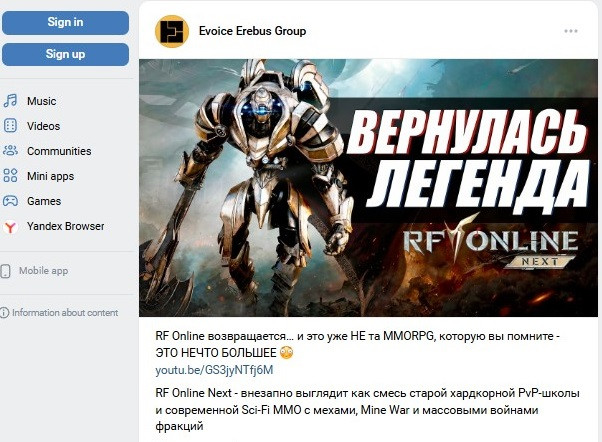
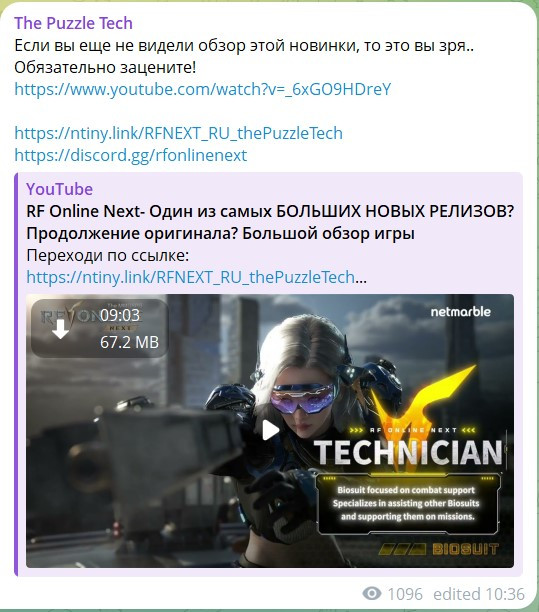
RMAA Agency coordinated the full production cycle for every placement. Because creators had no early access to the game before the release, the pre-registration videos were built around official gameplay footage and trailers provided by the publisher, combined with each creator's own commentary and reactions. Scripts were prepared by the creators, translated into English by us so the client's team in Korea could review them, revised where needed, and approved before release, and every publication carried a unique tracking link to the pre-registration page together with a link to the official Discord server. The program also grew during the flight. After the first videos went into production, the client decided to expand the pre-registration lineup with additional creators from our recommendations, which doubled the number of participating channels.
For the launch week, we secured seven placements timed to the first days after the release. Five Twitch streamers, including PCH3LK1N (576K followers), fasoollka (356K), shevronin (119K), nogpyra (71K), and browjey (57K), played the released game live between June 19 and June 24, while INDAGAME published a dedicated launch video and EvoiceErebus hosted a YouTube stream. All launch creators had previously worked with the publisher's earlier title, which simplified negotiations and guaranteed familiarity with the genre.
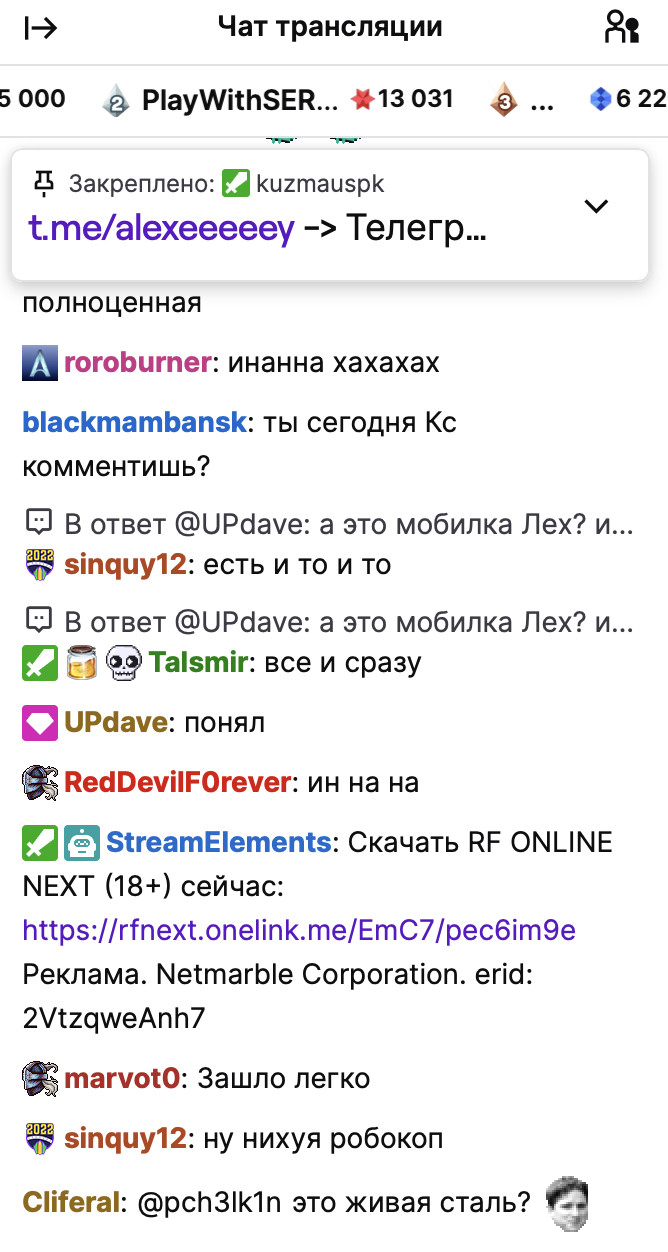
Comments to PCH3LK1N stream:
Yandex and VK campaigns
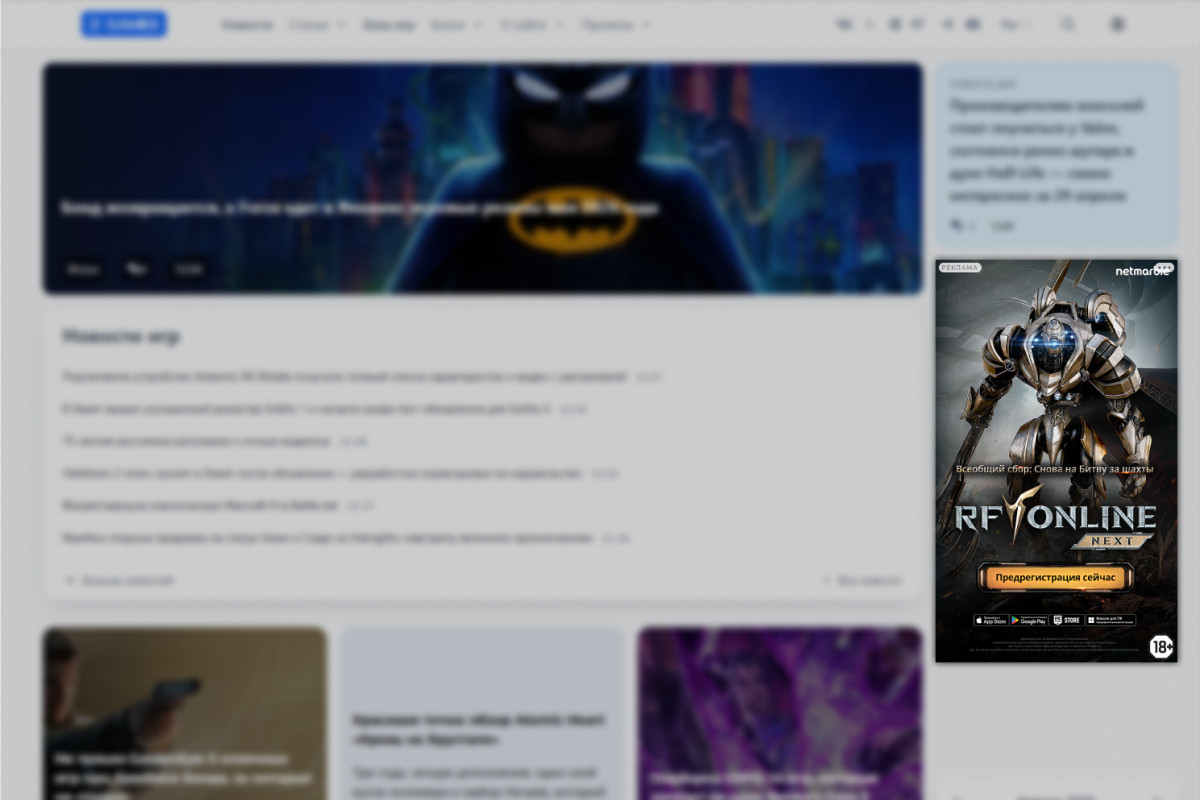
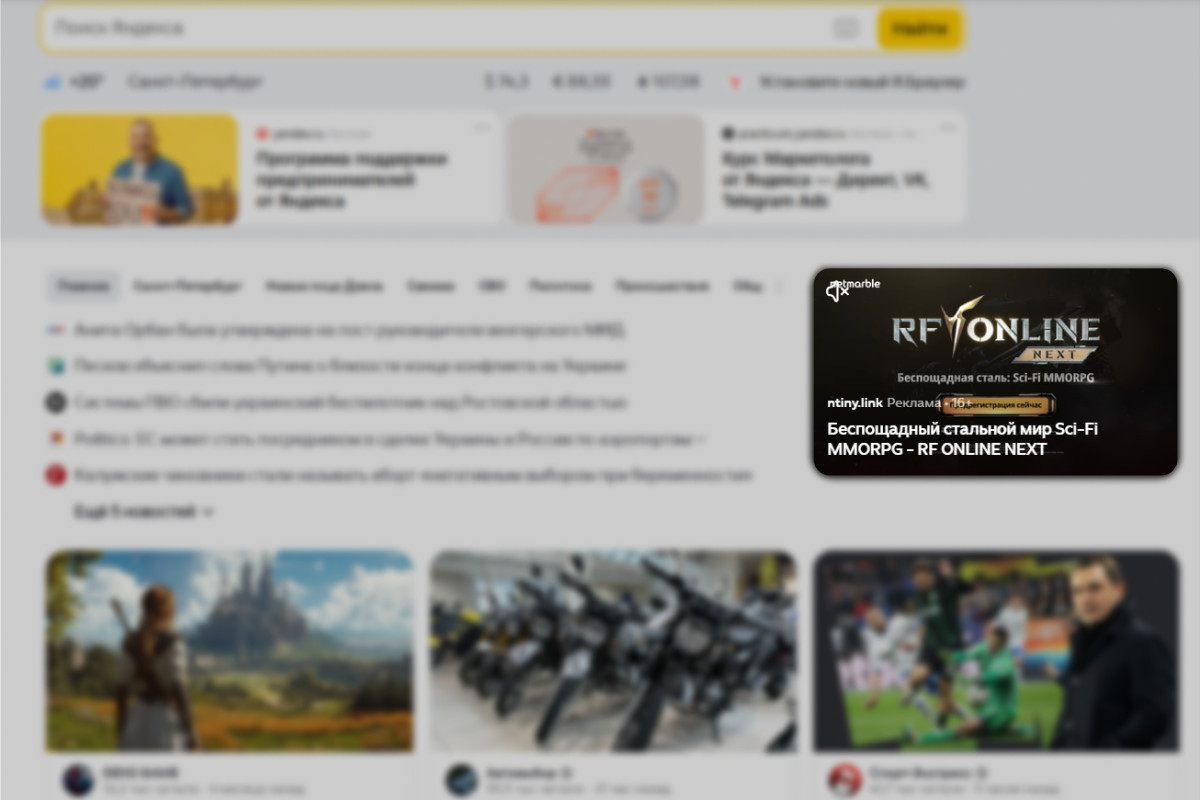
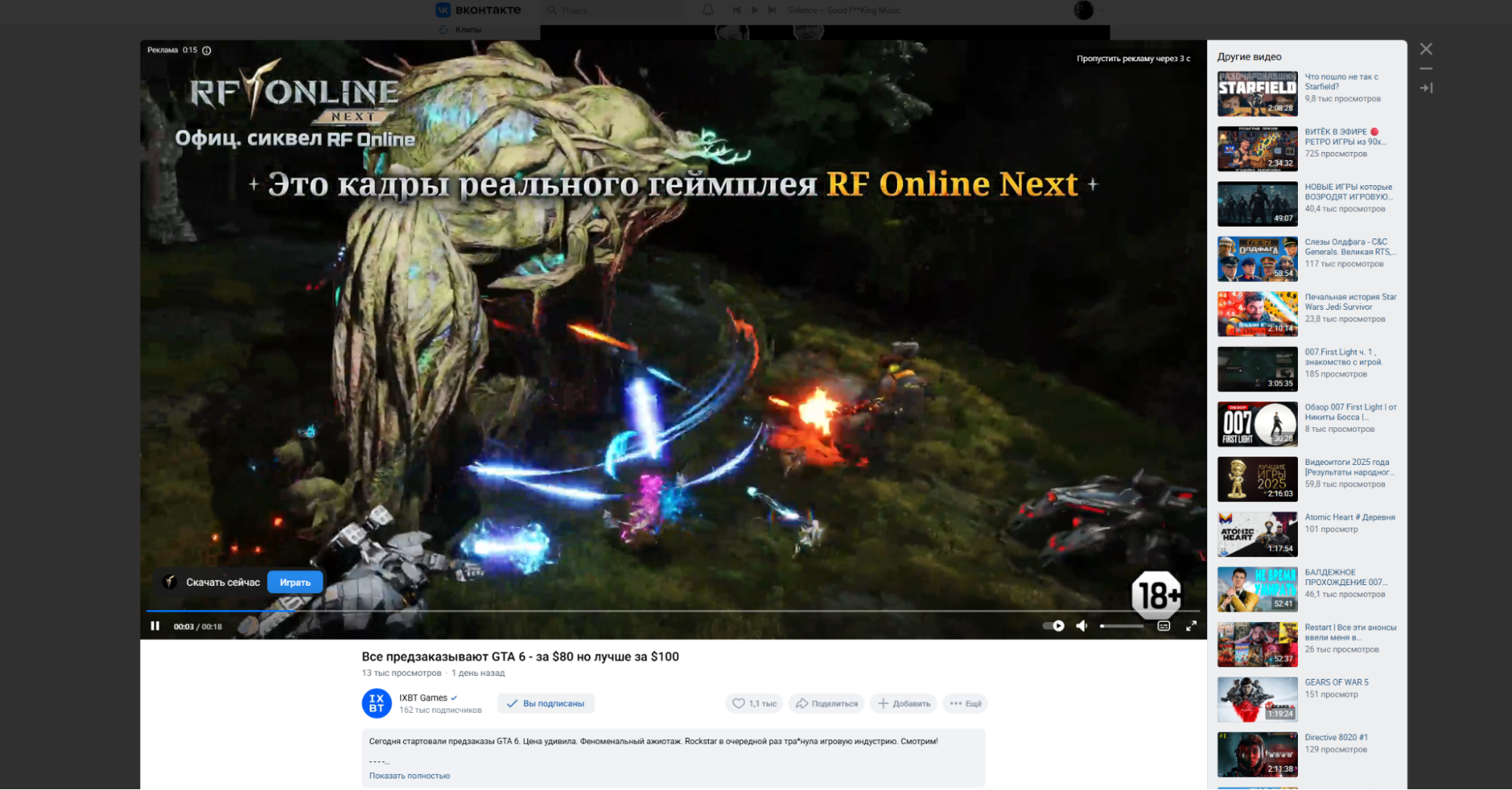
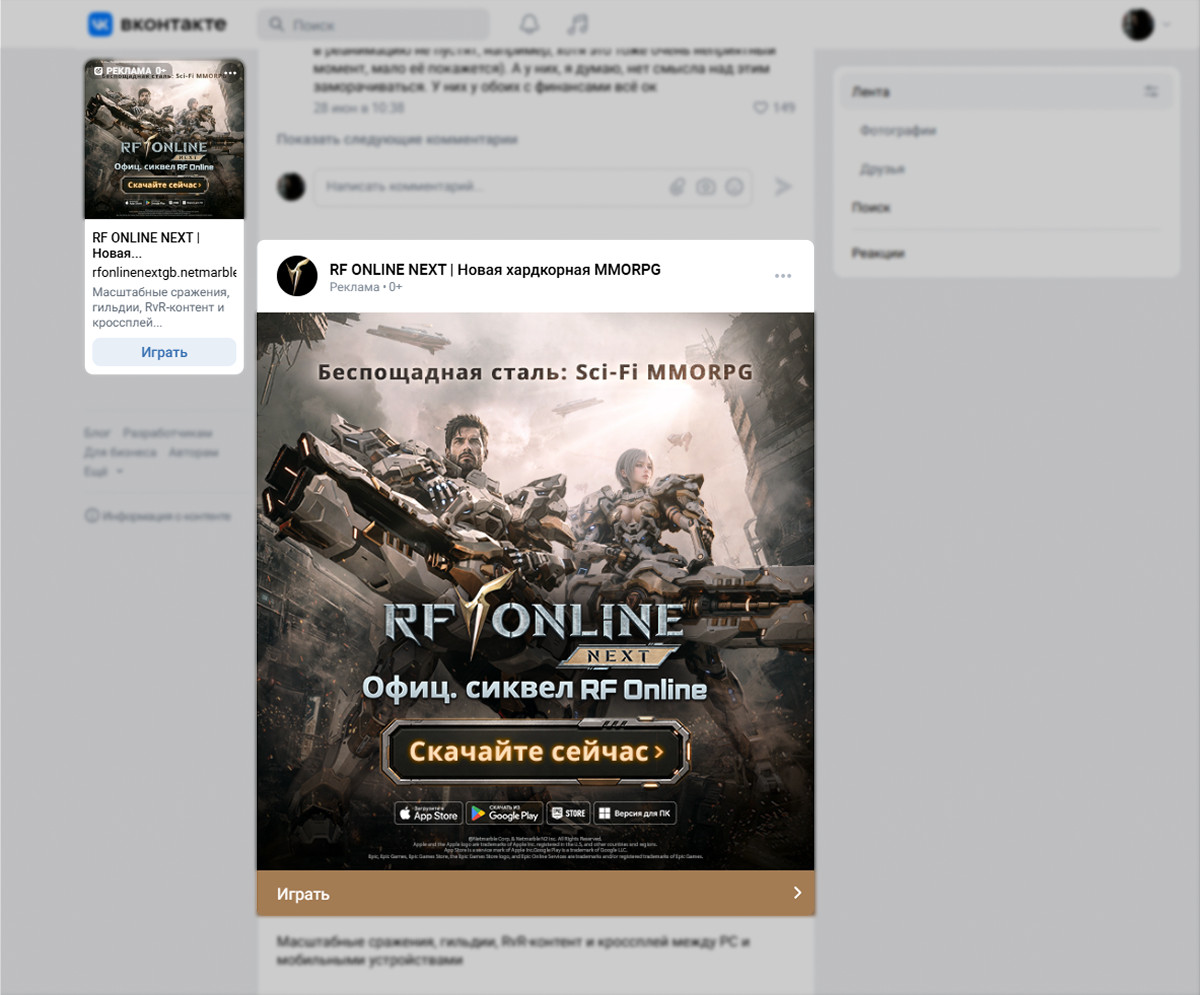
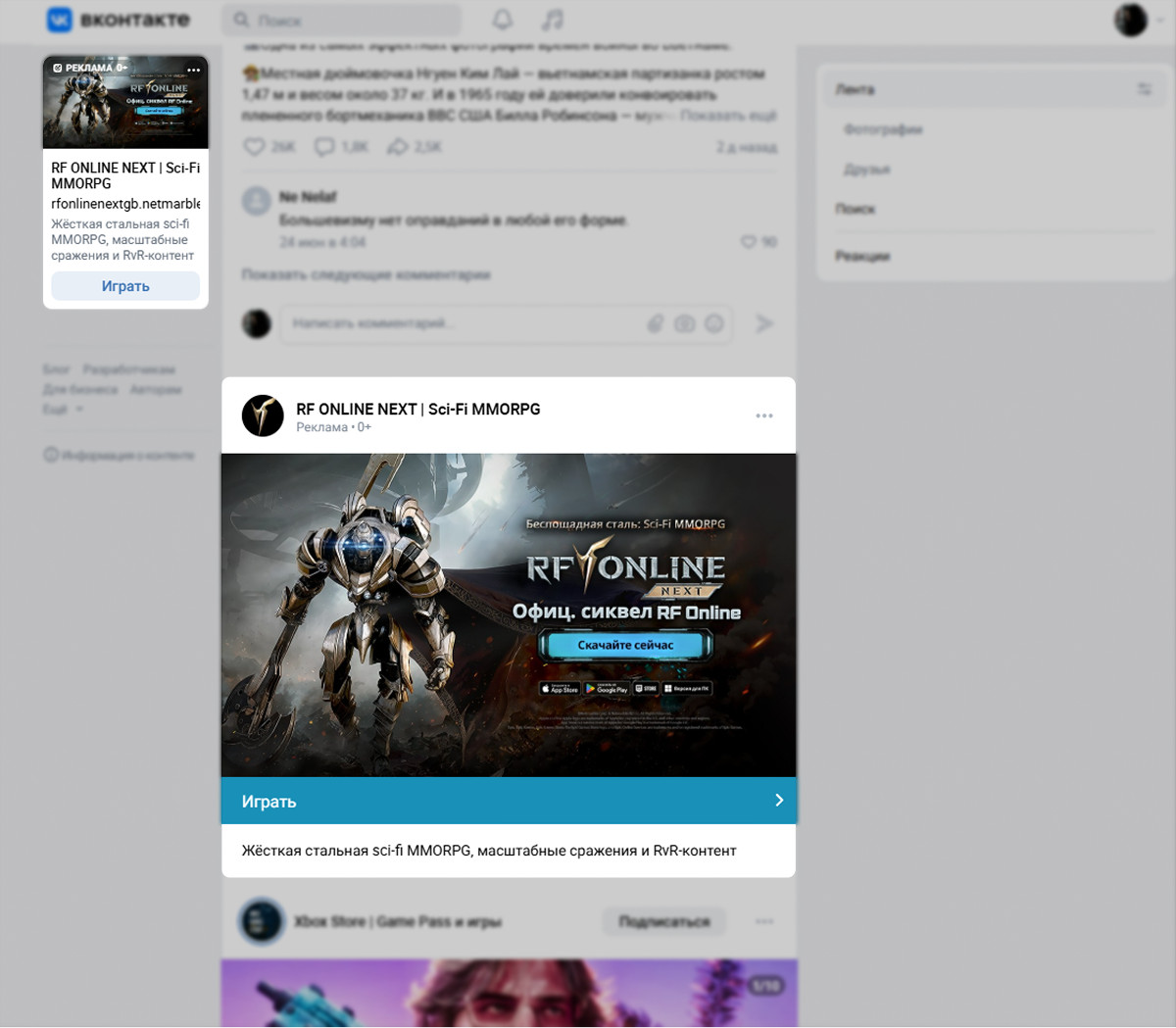
The Yandex activity ran in two parallel tracks. Performance placements used image and text ads with keyword and interest targeting to generate clicks to the pre-registration page, while media placements relied on banners and video ads to build awareness at scale. Both went live on April 30 and continued through the pre-registration stop on June 15, after which a second flight started on June 17 with updated creatives. When the client decided to extend the mix at the end of May, RMAA Agency added a VK Ads campaign with separate performance and media placements.
Optimization and reporting
At the client's request, we reported weekly on each individual creative, comparing every image and video by spending, impressions, click-through rate, and cost per click. Weak assets were paused and replaced several times during the flight, and the team manually excluded more than 700 low-quality traffic sources in the first weeks.
This fed straight into business decisions. Two weeks in, the client saw an upward trend in conversions in its own analytics and asked how to scale. The agency proposed a prioritized plan, from higher budgets on the campaigns that already performed to Yandex Search, VK Ads, and Russian gaming media. The client took the first steps, raising the Yandex budget several times and approving VK Ads, while the pacing was rebuilt after each change to keep spending even.
Post-campaign media field analysis
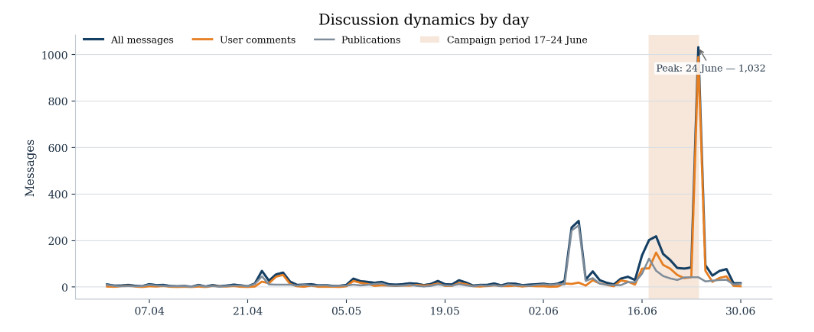
Beyond media metrics, our agency prepared an analytical report on the Russian-language media field around RF Online Next, covering the period from April 1 to June 30, 2026. The analysis processed 4,138 relevant messages, separated placements from organic user reactions, mapped the discussion by platform and by topic, and identified the practical barriers that players discussed after the launch. The report translated audience feedback into concrete recommendations that the client can apply in future communication, which gave the campaign a closing deliverable rather than a simple retrospective.
Results
Here is how the campaign turned out in numbers:
- Influencer content published during launch week collected 269,956 views.
- The pre-registration videos on YouTube added over 236,426 views ahead of the release.
- Yandex performance ads generated 347,501 clicks to the pre-registration page with a CTR of 1.33%, roughly three times the gaming category average reported by Yandex.
- The VK launch campaign brought 52,642 additional clicks in its first week.
The campaign also produced a visible echo in the Russian media field. On the business side, the client reported a growing trend in conversions in its own analytics soon after the Yandex campaigns went live and expanded the campaign budget in response, while the closing analytical report turned the launch-week reaction into practical guidance for future communication.